



Kauthar Khamis
Introduction
My thesis “Beauty in the Zongo” is an ethnographic study of how religious co-existence is lived through the lens of beauty. Taking a material and corporeal perspective, in my research I investigated beauty practices among Muslim and Christian women in a multi-religious and multi-ethnic neighbourhood called Madina Zongo. The Hausa term Zongo refers to a settlement created by migrant Muslim traders, soldiers, and clerics from some parts of West Africa. Madina Zongo is one of the vibrant cosmopolitan communities located in Ghana’s capital city of Accra.

Fig. 1: A part of Madina Zongo
Approaching beauty as multi-dimensional, entailing overlapping aesthetic, spiritual, moral, and erotic dimensions, this thesis investigates informal beauty practices among Muslim and Christian women as a lens into the dynamics of religious co-existence. Such a focus on female beauty practices is a productive starting point for understanding religious co-existence from the angle of gender.
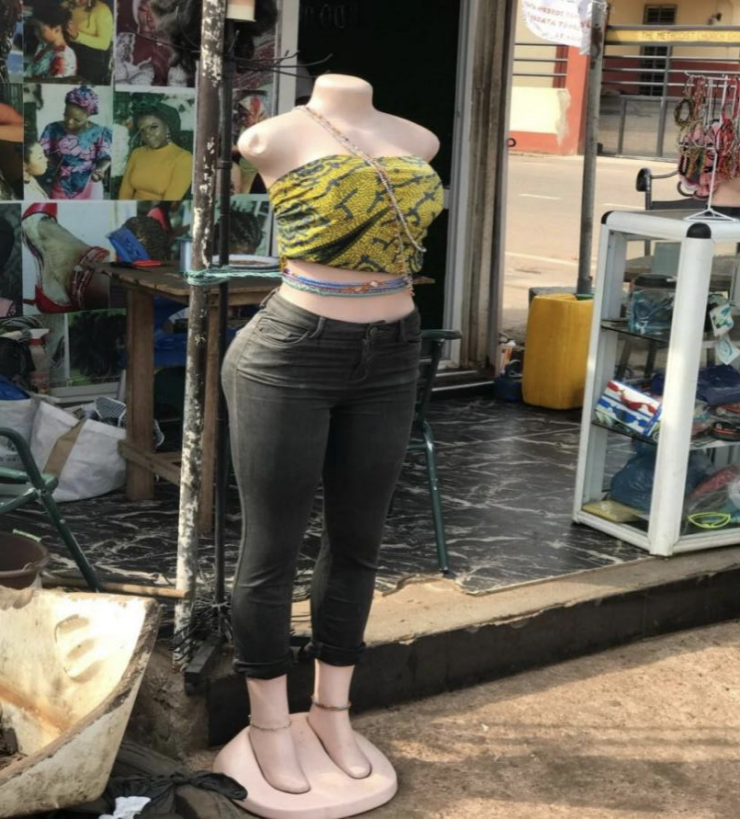
Fig 2: A female dummy depicting the multi-dimensional nature of beauty in the Zongo
Methodological and Theoretical Reflection on Co-existence
Scholarly works on women’s everyday beauty practices often study beauty as a form of social control, demonstrating how beauty results in tensions and individualistic tendencies at the family level and in public spaces. Moreover, most research on religious co-existence in Ghana largely focuses on inter-faith dialogue at the formal level, thereby reducing religious co-existence to civic and religious duties. By contrast, this study draws attention to beauty practices as lived everyday practices among Muslim and Christian women in a religiously and ethnically pluralistic context. It uses cosmopolitanism as a theoretical framework to shed light on how women’s beauty practices are shaped by local and global entanglements. The thesis analyses female beauty practices as ‘Zongopolitanism’, since it involves a mixture of local and global beauty practices.
The study employs ethnography as a research method. This involved interviews and participant observation, as well as formal and informal discussions over a period of three years, specifically in 2018, 2019 and 2021 in Madina Zongo. The focus of this study is on everyday encounters between Muslim and Christian women who own beauty salons, apprentices, clients, families, religious authorities, and other key stakeholders in Madina Zongo.
The main question investigated in this thesis is: how do Muslim and Christian women manage to look beautiful while ensuring that they fall within the scope of what is considered acceptable beauty practices in their respective religious groups? The thesis poses the following sub-questions: Firstly, what is beauty in Madina Zongo and what dimensions does it have in addition to the aesthetic one? Secondly, how do beauty parlours in the Zongo function as gendered and inter-religious spaces? Thirdly, apart from the religious meanings of veiling, what new meanings do women attach to the term; how do these new meanings affect religious co-existence, and how do they seek to achieve both beauty and piety? Fourthly, how do Zongo women beautify themselves in the erotic sense, and how do their erotic beauty practices offer ideas on gender and religious co-existence in Madina Zongo?
Selected Findings
Chapter One takes the aesthetics and ethics of beauty as entry point to understand women’s beauty practices. The chapter suggests that beauty in Madina Zongo is both personal and relational, since it has the tendency to promote conviviality or strain relationships. The thesis shows that, in cosmopolitan Madina, women are presented with several beauty options to experiment with. However, beauty practices taught by religious authorities and family relations require that women negotiate cosmopolitan beauty practices with regard to conservative ideas about beauty held by religious leaders and family elders; in these negotiations, women push to extend the boundaries of ethics and aesthetics of beauty as much as possible. The chapter also expounds that, in an attempt to gain protection from spiritual attacks, women cross religious boundaries.
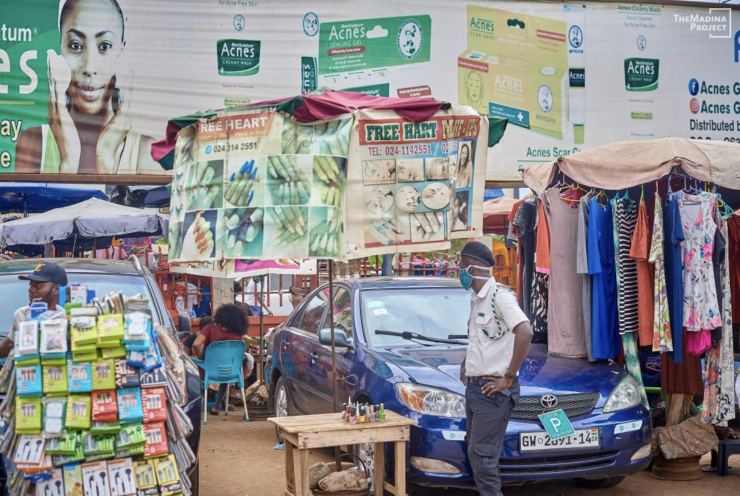
Fig. 3: A picture depicting nail arts, facial treatment, and imported second-hand clothing
Chapter Two focuses on beauty parlours as gendered and inter-religious spaces. The chapter examines spatial practices in beauty parlours owned by Muslim and Christian beauticians with religiously mixed clientele. The chapter explains that, due to the intimate work on clients’ bodies, the beauty profession is considered potentially dangerous. Despite the risks and dangers involved in this work, Christian and Muslim women in the Zongo still dare to pursue the beauty profession as a survival strategy, while they constantly employ similar and sometimes different ways of seeking protection from God. In these beauty spaces, Muslim and Christian women intermingle, sharing tips about beauty and advising one another on how to maintain healthy and stable relationships with their husbands.
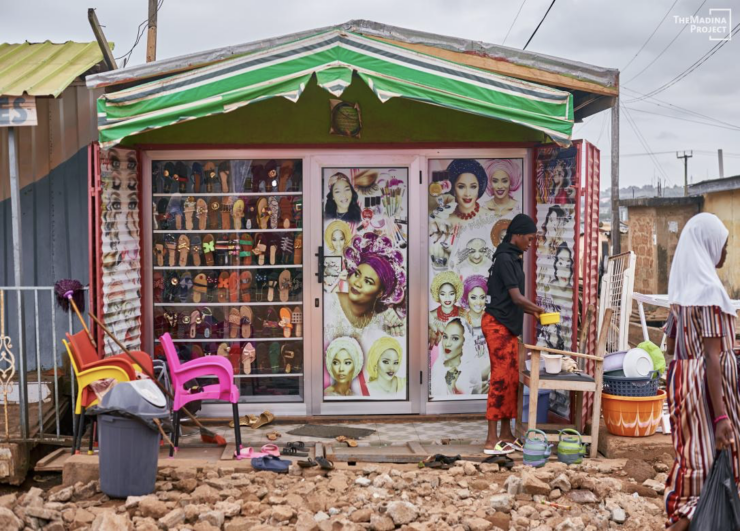
Fig. 4: A beauty parlour owned by a Muslim beautician
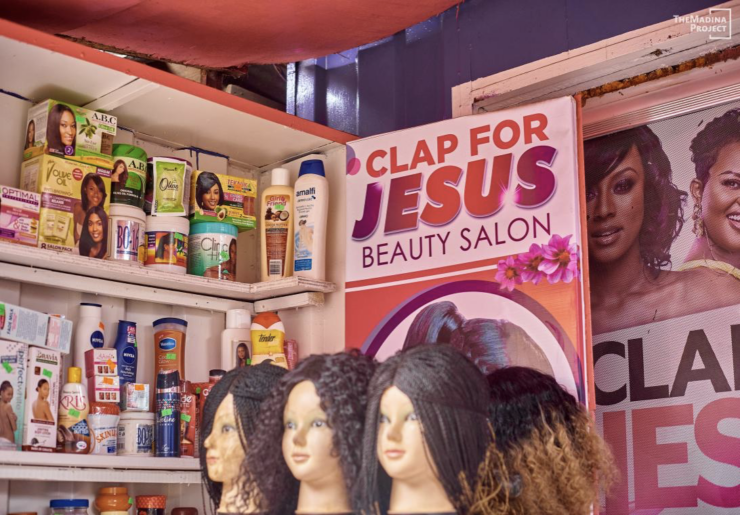
Fig. 5: A beauty parlour owned by a Christian beautician
Chapter Three pays attention to how beauty and piety are embodied through veiling practices. This chapter reveals that, through the veiling practices of Muslim and Christian women, terms such as beauty and piety, which may at first sight be considered as contradicting each other, become compatible and complementary. For instance, in a multi-religious context such as Madina Zongo, the meaning of veiling among Muslim and Christian women is fluid and elastic. Key among the findings of this chapter is how veiling as a religious practice is ‘secularized’ for pragmatic purposes, adopted by Christian women as a way to protect themselves. The chapter notes that, while new meanings attributed to veiling practices could be seen as an aspect of peaceful co-existence, it could also lead to tensions in the case of ‘inappropriate appropriation’.
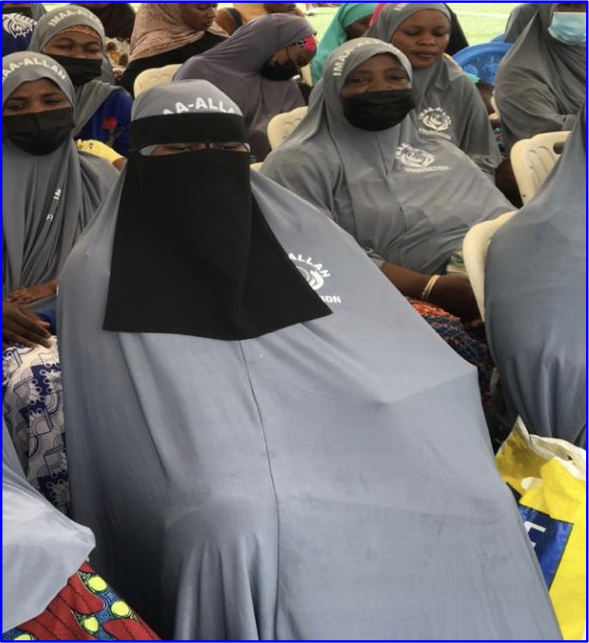
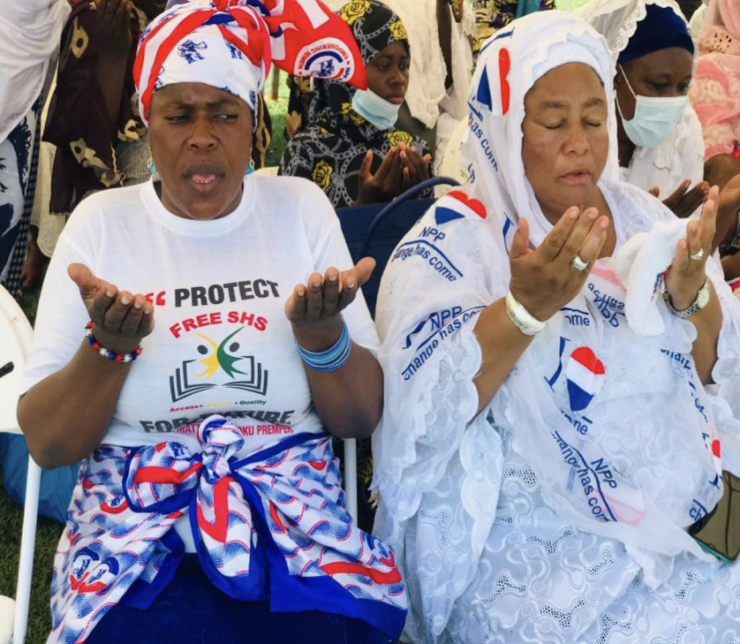
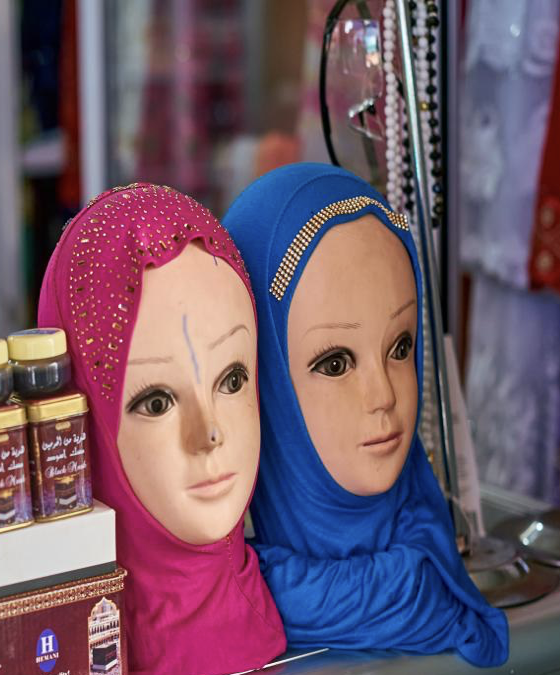
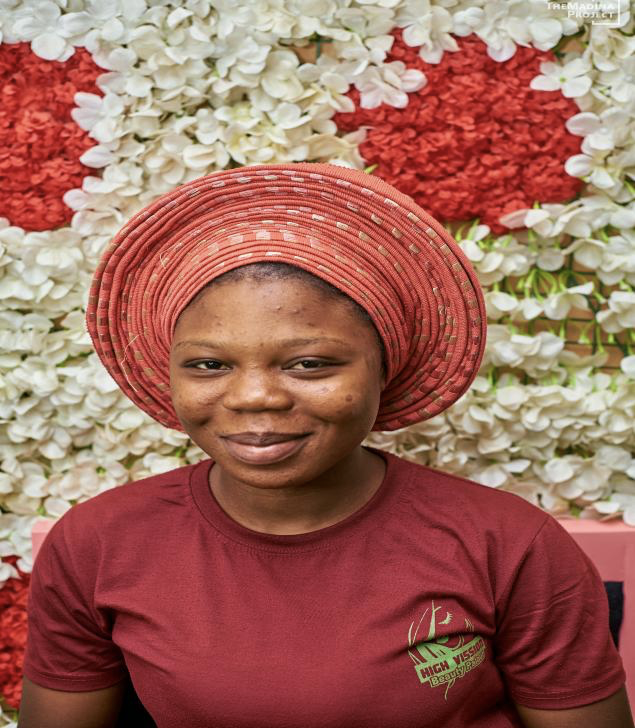
Fig. 6: Some veiling styles in the Zongo
Chapter Four explores the erotic dimension of beauty through the lens of kayan mata (aphrodisiacs used by women) asa form of counselling on women’s sexuality. The goal is to highlight how faithful women navigate access to erotic beauty practices, given that sex is highly moralized in Madina Zongo. The chapter frames the commodification of kayan mata through the medium of TikTok as a popular counselling approach. The findings of the study expose the inadequacies of the established standards (church and mosque) of counselling on female sexuality in the Zongo by Faith Based Organizations. The thesis analyses such counselling practices as characterized by secrecy during sexual education, confessional in approach, and bias towards women. The chapter then suggests that, in a multi-ethnic and multi-religious context of Madina, the provision of kayan mata counselling through social media allows for disclosures during sex education, prevents judgement and guilt, while ensuring individual anonymity as well as cross-cultural and cross-religious borrowing.
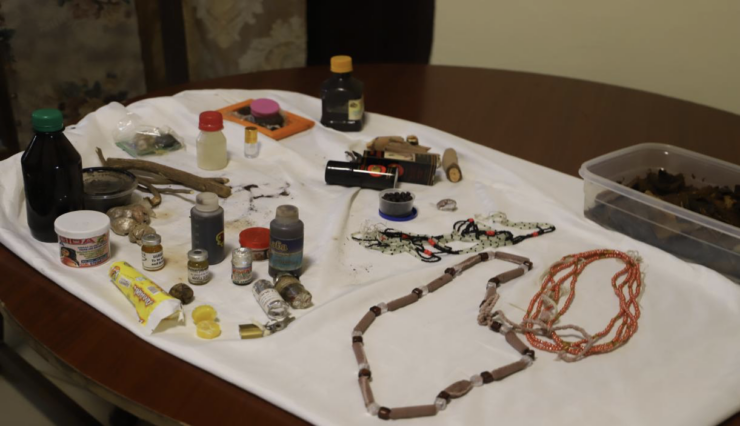
Fig. 7: Some kayan mata products used for erotic beauty practices
Contribution to Scholarship
The thesis proposes that a focus on women’s beauty practices at the everyday, informal level is critical towards understanding co-existence from a gendered perspective in a plural setting. This is mainly the case because beauty in Madina Zongo is fundamentally used as a term relating to women, whereas male beauty practices are seldom discussed. Also, even though existing religious, social, and cultural regimes try to regulate women’s appearance at the informal, everyday level, Zongo women are not passive consumers of the regimes that control their appearance. Instead, they demonstrate agency by strategically engaging with cosmopolitan beauty practices as well as beauty practices of the religious ‘other’ to create distinct identities for themselves. Moreover, the study proposes that in inter-religious zones such as beauty parlours, where beauticians employ distinct approaches to express their religious affiliations, they also cross religious boundaries to accommodate and tolerate apprentices and clients who share different religious backgrounds from that of the madam. Here, it is important to stress that the identification and affiliation of certain beauty practices with a particular religious group or religious act could be misleading. This is so because, in an attempt to look beautiful in an aesthetic, ethical, moral, and erotic sense, Muslim and Christian women copy and borrow from each other.
Conclusion
This thesis proposes that co-existence is not just about encounters and dialogue in formal spaces and on specific formal issues. Rather, women’s everyday beauty practices and informal spaces, including veiling, hairstyles, dresses, aphrodisiacs, and beauty parlours, shape how religious co-existence occurs in Africa. Foregrounding the beauty practices of Muslim and Christian women in Madina Zongo along these lines, this thesis argues, offers deep and new insights into knowledge production about religious co-existence as lived. In sum, the thesis argues that the study of everyday beauty practices among Muslim and Christian women in Madina brings to the fore largely neglected modalities of religious co-existence —including conviviality, tensions, othering, borrowing, copying, and appropriation.